THE TECHNIQUE
A bubble on a pipe
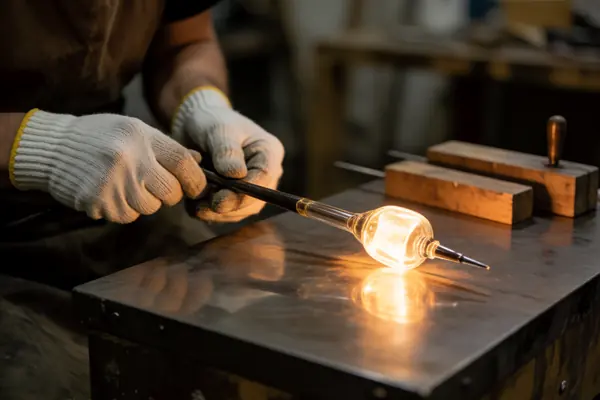
The V&A describes it simply: inflating a blob of molten glass on the end of a blowpipe. The first bubble is called a parison.
Follow the heat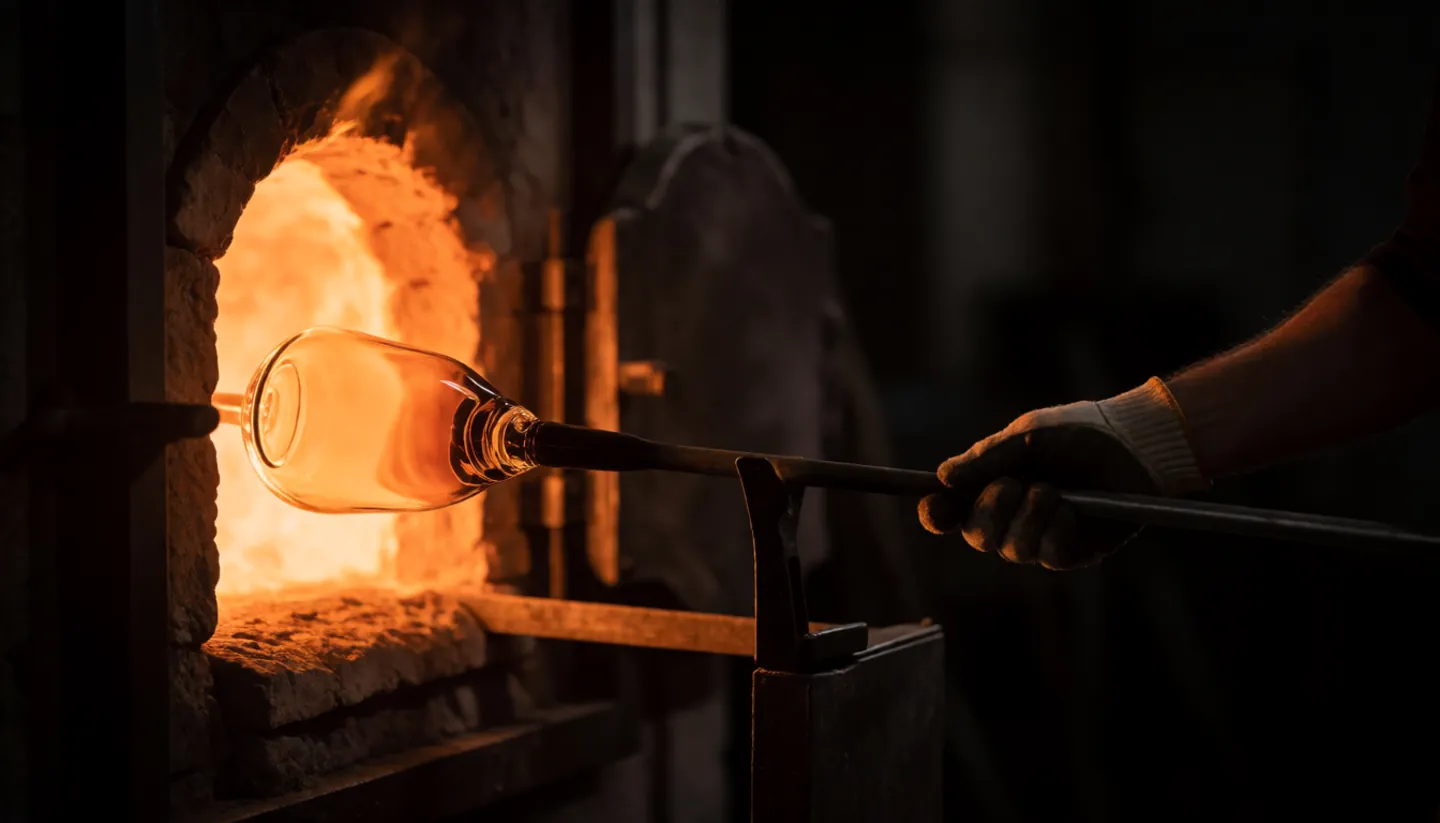
CRAFT AND HISTORY, FROM THE MUSEUMS
1ST CENTURY BC the first blowpipes
AI-generated image, not a photograph of a real person or place.
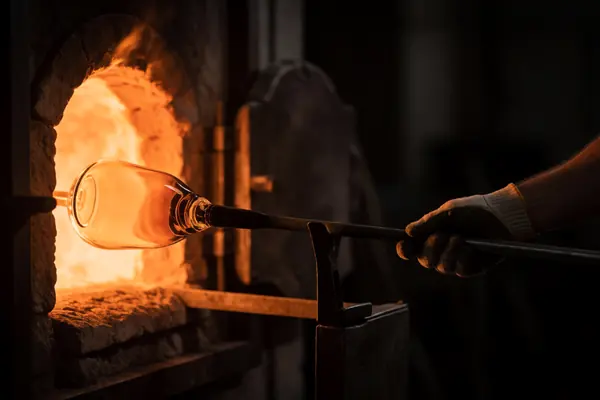
A glass vessel starts as a glowing blob on a pipe.
Glassblowing was invented in the eastern Mediterranean in the 1st century BC and quickly took over from slower ways of making glass. The basic moves have barely changed since: gather, shape, blow, and cool slowly so the glass does not crack.
THE SHORT ANSWER
Molten glass is thick enough to hold a bubble
and stiffens as it cools.
THE TECHNIQUE
The V&A describes it simply: inflating a blob of molten glass on the end of a blowpipe. The first bubble is called a parison.
Follow the heatTHE INVENTION
The Met says glassblowing developed in the Syro-Palestinian region in the early 1st century BC and revolutionised the Italian glass industry.
How it spreadTHE TOOLS
The glass is rolled on a marver, a smooth flat surface, then shaped with jacks, pincers and shears, using gravity and swinging the pipe.
The steps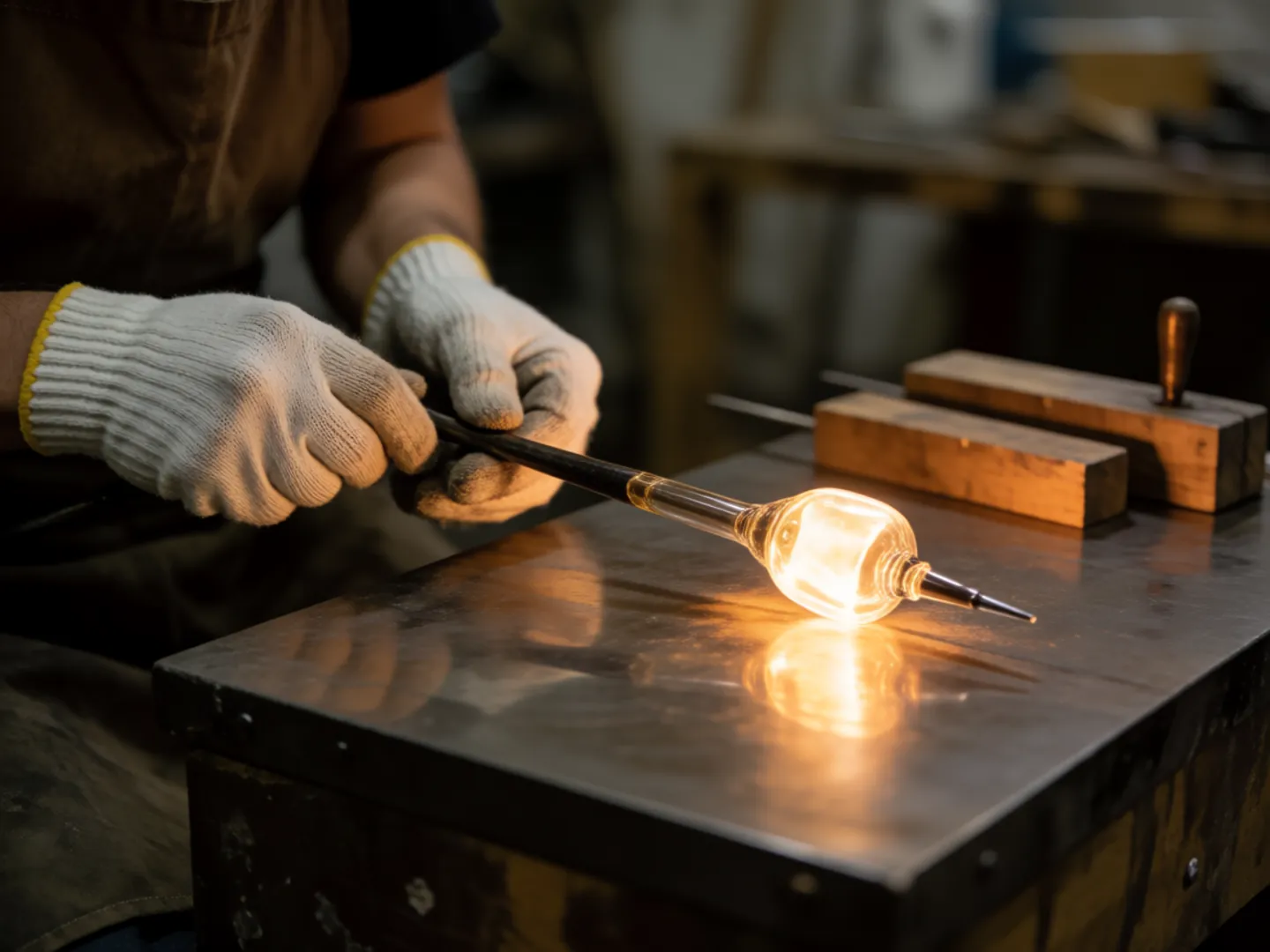
FROM FURNACE TO FINISHED PIECE
This is the sequence the V&A's A–Z of glass and other sources describe. In a studio the master glassblower, or gaffer, works with assistants who bring more hot glass when needed.
Preheat the nose of the pipe, dip it into the molten glass in the furnace, rotate it and draw out a gob, much as honey winds onto a dipper.
Roll the gob on the marver, a smooth flat surface, or shape it with a wooden block or a pad of damp paper. This forms a cooler skin.
Blow through the pipe to form the parison. More glass can be gathered over the bubble to make a bigger piece.
Swing, turn and work the glass with jacks, pincers and shears, reheating it in the glory hole to keep it soft. Handles and stems fuse on when hot glass touches hot glass.
TWO NUMBERS WORTH KNOWING
One date for the invention,
one span from a London museum's collection.
1st century BC
When glassblowing developed
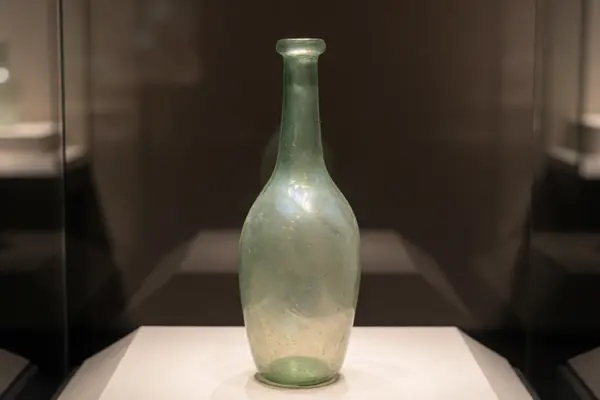
The Met says it developed in the Syro-Palestinian region in the early 1st century BC, and probably reached Rome with craftsmen after the area was annexed in 64 BC.
INVENTION · THE MET
3,500 years
Glass-making history in one collection
The V&A says its glass collection, one of the largest in the world, shows the development of design and technology in glass-making over 3,500 years.
COLLECTION · V&A
The Met notes that core-formed and cast glass vessels were made in Egypt and Mesopotamia as early as the 15th century BC, long before anyone blew glass.
HOW HOT IS EACH STAGE?
Glass is melted very hot, worked a little cooler, and cooled very slowly at the end. Pick a stage to see the typical temperature. The bar shows how hot it is.
Temperatures for soda-lime glass as given in Wikipedia's Glassblowing article (the section relies on a single source). Craft information only; hot glass work needs proper training.
HOW IT CHANGED ROME
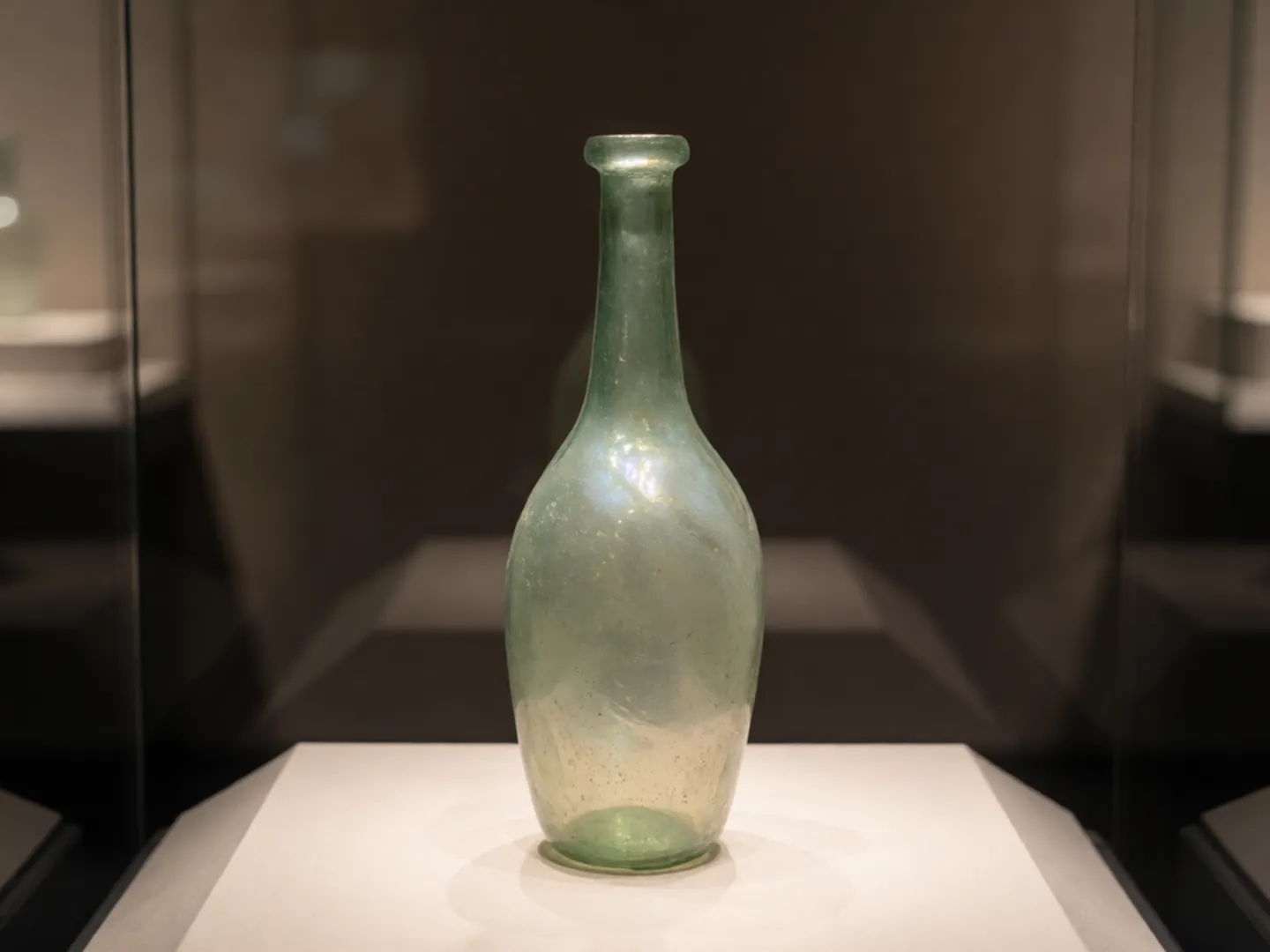
The Met says blowing freed glassworkers from the laborious casting process. It allowed unprecedented speed and variety, from flasks shaped like sandals and fruit to helmets and animals, and glass drinking cups quickly replaced pottery ones in Italy.
Mould-blowing, inflating the glass into a carved mould, followed in the 1st century AD and made large-scale production possible. By then glass was in nearly every part of Roman daily life, from perfume bottles and storage jars to windowpanes in the public baths.
In conversation
No single person is named. The Met says it developed in the Syro-Palestinian region in the early 1st century BC; Wikipedia credits Phoenician and Syrian craftsmen with the blowpipe technique.
The V&A uses the word for the bubble formed when the glassblower first blows through the pipe into the gathered glass. It is then shaped into the final piece.
A furnace opening used to reheat the piece between working steps, so it stays soft and workable. The V&A describes the master glassblower constantly reheating the glass this way.
Cooling it slowly in an annealer, or lehr, stops it cracking or shattering from thermal stress. Wikipedia says this can take from a few hours to a few days, depending on size.
The V&A says lampworking shapes rods and tubes of glass in a flame. Because it needs only a torch, it was often a cottage industry and is used for traditional Christmas decorations.
Each figure on this page comes from the sources below.
ABOUT THIS NAME
doodleblows.com is part of the DoodleSale portfolio. It isn't in an auction right now, but you can ask about leasing it.